
SLRP-2: Piloting a New Approach to CIPP in the Nation's Capital
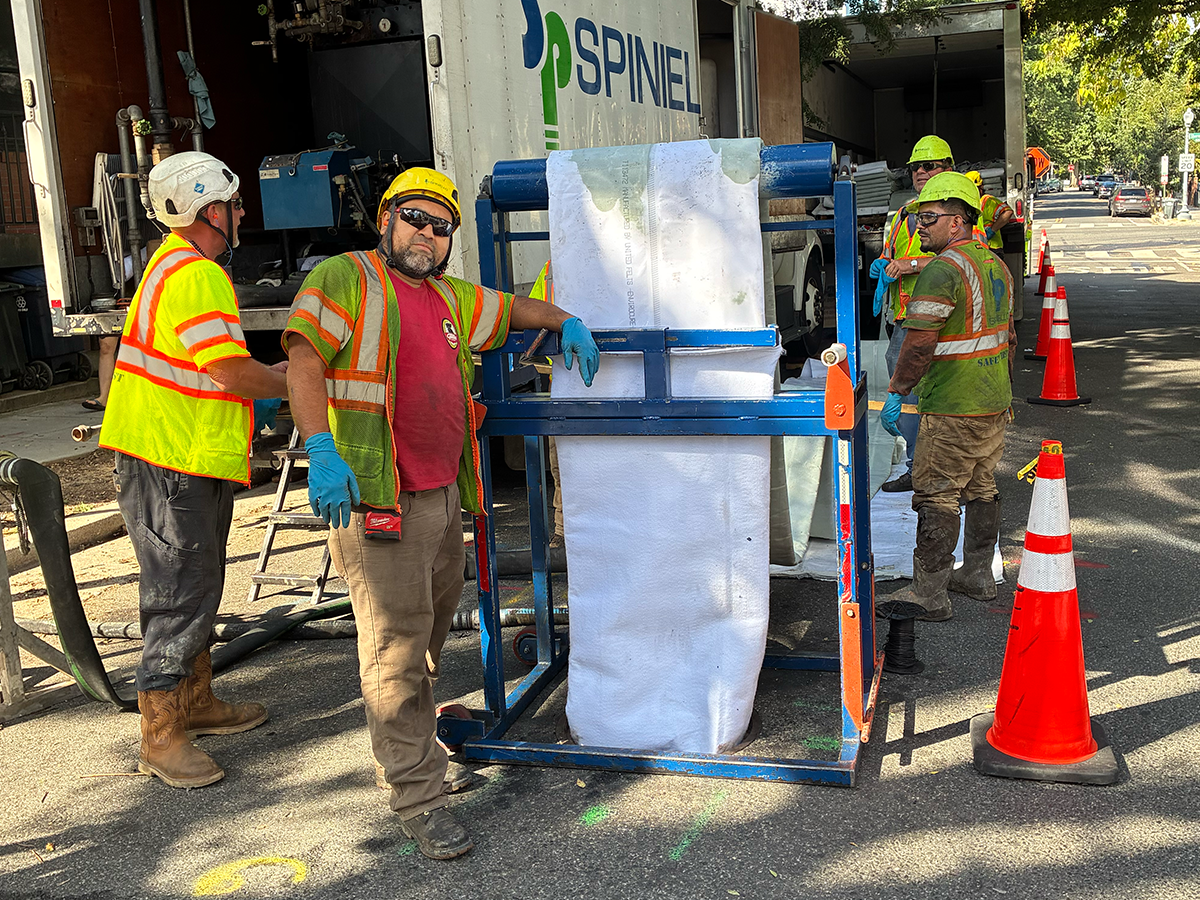
Beneath the streets of Washington, DC runs a network of combined sewer lines that residents count on every day, whether they think about it or not. Through DC Water's Service Life Restoration Program, Spiniello is giving those lines a new life without replacing them pipe by pipe.
On SLRP-2, our crews are rehabilitating combined sewers from 8 to 39 inches in diameter using cured-in-place pipe (CIPP) lining. By the time the lining scope wraps, the team will have installed approximately 60,000 linear feet of new liner over roughly two and a half years.
Why this work matters
Old, deteriorating sewers let groundwater and stormwater leak in, a problem known as inflow and infiltration (I&I). They can also let sewage leak out. CIPP lining seals the pipe from the inside, which means less water has to be treated at the wastewater treatment plant and less sewage reaches the surrounding soil and groundwater.
The benefit reaches well beyond the District line. Reducing sewer I&I cuts the nutrient load flowing into the Chesapeake Bay, so the work done under DC's streets helps protect the entire Bay watershed.
Solving for permits and tight work windows
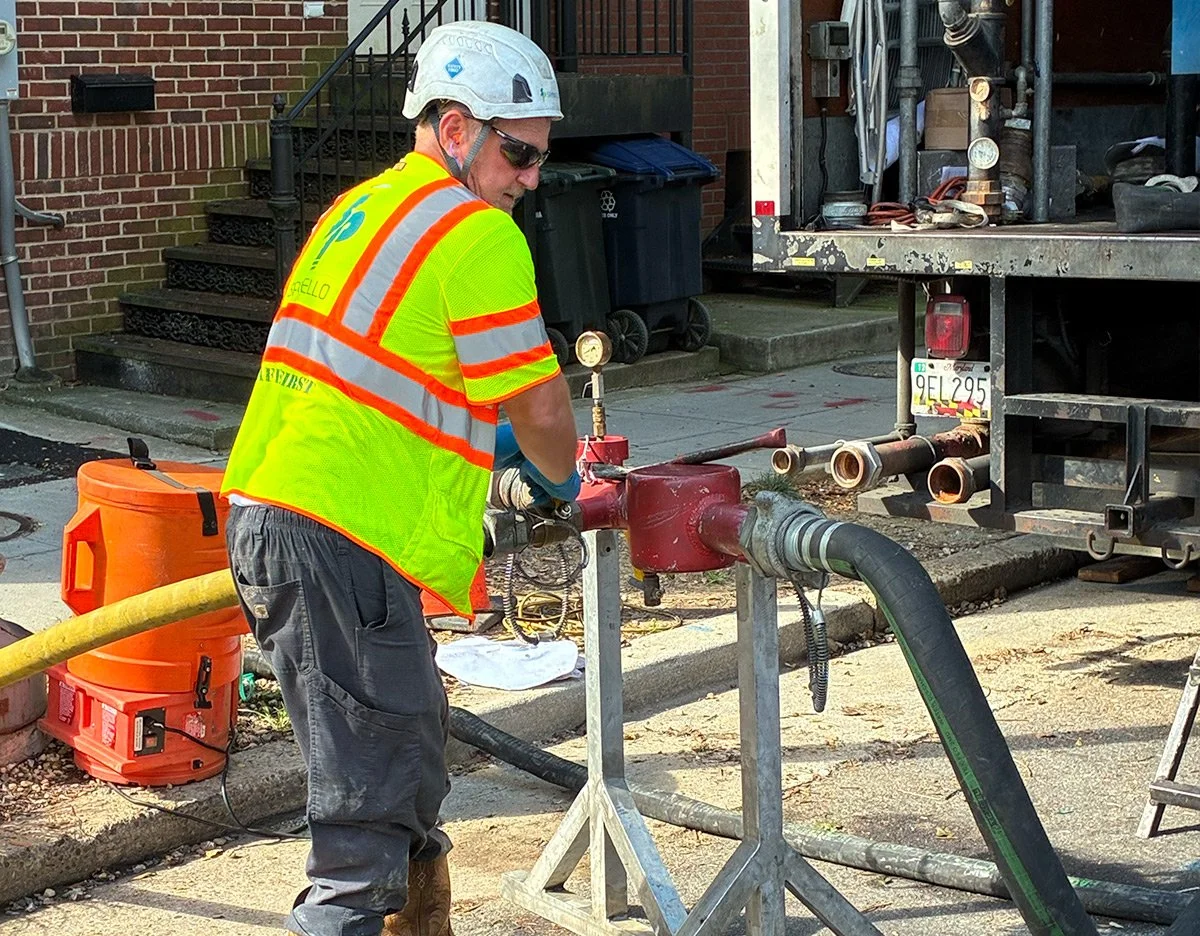
SLRP-2 served as a pilot for CIPP in the District of Columbia. The project was originally designed around water-cured CIPP installations, but permitting requirements and tight work-hour restrictions made that approach difficult to execute in a dense urban setting.
Spiniello worked with DC Water to introduce EnviroCure steam-cured CIPP liners. The change shortened the working hours needed at each site and reduced the number of permits required to complete the scope, keeping the program moving.
The people behind the project
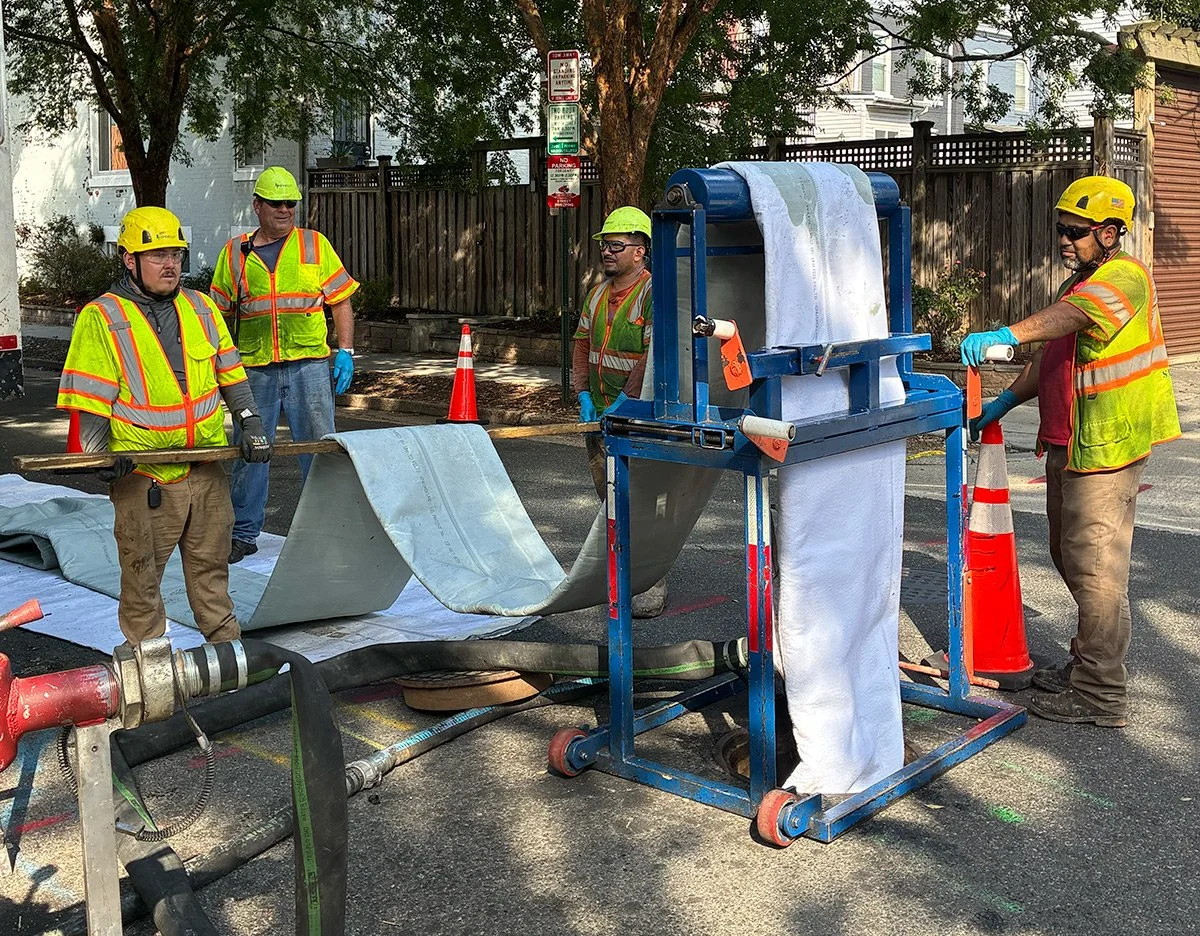
CIPP Lining Superintendent Michael Peddicord is closing in on completion of the lining scope, having led the crew through the coordination that comes with working in a busy city, from property owners to regulatory agencies. Open Cut Excavation Superintendent Saul Hernandez leads the project's excavation work.
Project Engineer Adam Prince has become a key figure in driving SLRP-2 toward a successful finish, keeping the schedule on track while coordinating across multiple project stakeholders.
What comes next
SLRP-2's results have carried forward: DC Water has awarded Spiniello the successor project, SLRP-5. It is a clear signal of what our people delivered here, overcoming permit challenges and piloting new CIPP technology in the nation's capital.